
In today’s era of economic globalization, the control of diesel engine exhaust emissions has become a critical issue in industrial production and public services. Renowned for their high power and excellent durability, diesel engines are widely used in key sectors such as industrial manufacturing, data centers, airports, hospitals, banks, metallurgy, steel production, backup generator sets, and marine vessels. However, pollutants like black smoke, particulate matter (PM), and nitrogen oxides (NOₓ) generated during combustion pose a severe threat to the environment. Green Valley Environmental Protection, with deep expertise in exhaust treatment, provides efficient and reliable emission solutions for various diesel-powered equipment through its independently innovated diesel engine after-treatment system, empowering the green transformation of industries.
As the core equipment for black smoke and particulate matter control, Green Valley Environmental Protection’s particulate filters include the independently developed dry-type black smoke purifier. Adopting metal felt filter materials made of imported 316L alloy wire from France, this purifier boasts remarkable advantages such as high temperature resistance, corrosion resistance, and high air permeability. Leveraging professional fluid dynamics design, exhaust gas can pass through the filter element 360 degrees comprehensively. Combined with a parallel mechanism of multiple metal DPF carriers, it greatly increases the filtration area and improves particulate matter capture efficiency, effectively solving the problem of black smoke emissions from diesel engines.
Green Valley Environmental Protection’s particulate filters feature a snap-on detachable structure, allowing the filter element to be flexibly extracted for water washing regeneration. Simply rinsing with high-pressure tap water for 30-40 seconds and then air-drying enables regeneration, breaking the traditional mold and reducing the total life-cycle cost of the equipment. The system is equipped with an intelligent control system and an automatic bypass alarm system. When carbon deposits on the filter element cause an increase in back pressure, the bypass valve will automatically open to ensure the normal operation of key equipment such as generator sets and avoid engine damage due to high back pressure. The DPF in Green Valley’s diesel engine after-treatment system is made of stainless steel, which not only extends the service life but also achieves a noise reduction effect of 10-15 decibels, meeting the dual needs of environmental governance and noise control.
For the control of nitrogen oxide emissions, Green Valley Environmental Protection’s independently developed SCR denitration system demonstrates strong adaptability and purification efficiency. Using urea aqueous solution, this system efficiently reduces NOₓ into harmless nitrogen and water under specific catalyst and temperature conditions, meeting the ultra-low emission standards required by the latest national environmental regulations, with ammonia slip controlled below 3ppm. To further improve treatment efficiency and optimize configuration, Green Valley Environmental Protection has innovatively launched integrated systems such as DOCF+SCR and DPF+SCR. By integrating different treatment functions into a single device, these systems significantly save installation space, simplify exhaust system layout, and reduce manufacturing and maintenance costs.
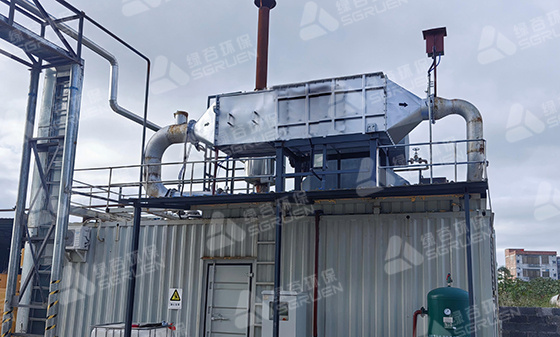
With its efficient, economical, and convenient solutions, Green Valley Environmental Protection’s diesel engine after-treatment system provides strong support for diesel engine exhaust treatment. Green Valley Environmental Protection will continue to deepen technological research and development, optimize product performance, expand application fields, improve the thermal efficiency of internal combustion engines, reduce carbon emissions, and contribute to the development of global environmental protection causes.
Post time: Dec-22-2025