
Engineering Implementation of ASC
ASC adopts a dual-layer catalyst design, which is the mainstream solution for field applications:
- Upper-layer catalyst: Pt/Al₂O₃ — efficiently oxidizes NH₃ into N₂, N₂O and H₂O. Platinum delivers the highest activity for NH₃ oxidation, yet it may also over-oxidize NH₃ into NOₓ (selectivity acts as a core design indicator).
- Lower-layer catalyst: Cu-based or Fe-based zeolite SCR catalyst — captures NOₓ by-products possibly generated in the upper layer and reduces them into N₂ using residual NH₃. This dual-layer structure ensures low NH₃ concentration at the ASC outlet and prevents NOₓ rebound caused by NH₃ over-oxidation.
Operating temperature window of ASC: 200~500°C, which highly overlaps with the operating window of SCR, guaranteeing performance across all operating conditions. Space velocity design: 30,000~60,000 h⁻¹.
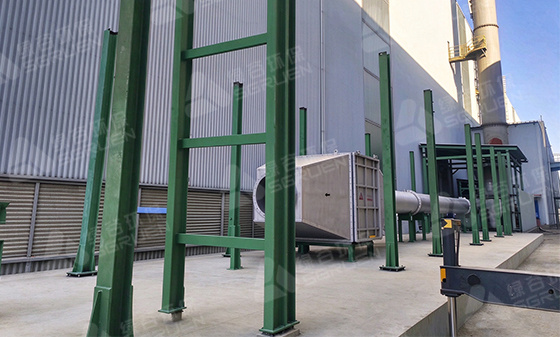
Functions and Key Parameters of ASC in On-site Systems
- Target: NH₃ at ASC outlet ≤ 5~10 ppm (China National VI standard generally requires <10 ppm, while the typical on-site control target is ≤5 ppm).
- N₂O By-product Control: N₂O may form during NH₃ oxidation (its greenhouse effect is 273 times that of CO₂). N₂O generation shall be minimized via catalyst formulation optimization (e.g., reducing Pt loading, increasing the thickness of the underlying SCR layer) and precise temperature control.
- ASC Aging Management: The ASC catalyst ages over operation time, accompanied by declining ammonia oxidation efficiency. Sustained excessive NH₃ at the ASC outlet (>10 ppm) indicates that the ASC catalyst requires replacement. The typical service life of ASC is 3~5 years (subject to sulfur content and thermal load).
IV. Comparative Analysis Between the New System and the Traditional System
| Comparison Item | Traditional System | New Control System |
|---|---|---|
| Feedforward Control Strategy | Based on exhaust flow measurement; greatly affected by temperature, altitude and backpressure, with an error of 10~20% | Based on power-emission factor; reliable signal, short logic chain with built-in compensation capability |
| Ammonia Slip Detection | No direct detection method; relies on open-loop control with high risk of ammonia slip | Ammonia slip estimated via cross-sensitivity of NOₓ sensors; closed-loop control realized without extra hardware |
| Temperature Management | Simple temperature-triggered injection control, no temperature-efficiency model | Temperature-efficiency model established with multi-point calibration and comprehensive temperature protection strategy |
| Response to Load Fluctuation | Response lagging; depends on feedback from downstream NOₓ sensors, easily resulting in NOₓ over-limit or ammonia slip | Fast injection limiting protection upon sudden load drop; reads real-time ECU power for advance injection reduction |
| Environmental Adaptability | No adaptive capacity; calibration deviation occurs at high altitudes or under temperature variation | Built-in environmental adaptive coefficients, steady-state learning, automatic compensation for environmental changes and catalyst aging |
| Catalyst Management | No function for catalyst efficiency monitoring or aging detection | Calibration of catalyst treatment efficiency, aging degree monitoring and operating point optimization |
| Error Handling for Long Piping | No dedicated countermeasures; deviation exists between metering at the pump end and actual injection volume at the nozzle | Multiple solutions including piping shortening, auxiliary gas purging and control strategy compensation |
V. Conclusion
Taking the integrated DOC+SCR+ASC exhaust aftertreatment system for gas-fired internal combustion engines as the framework, this report comprehensively analyzes three modules: DOC catalytic oxidation, SCR denitrification control and ASC ammonia slip control. It identifies the limitations of traditional SCR control systems, including errors induced by long pipelines, nozzle deviation, flowmeter deviation, insufficient catalyst management and flawed control strategies.
To tackle these challenges, the new control system proposes a series of innovative technical solutions:
- Adopt feedforward control based on power-emission factor to replace traditional flow-based feedforward, improving system reliability and stability;
- Estimate ammonia slip by utilizing the cross-sensitivity characteristic of NOₓ sensors, realizing closed-loop ammonia slip control without extra hardware cost;
- Build an accurate temperature-efficiency model to keep the system operating within the optimal efficiency range of the catalyst and boost denitrification efficiency;
- Develop fast injection limiting protection for sudden load drop to effectively prevent over-injection and ammonia slip;
- Introduce environmental adaptive coefficients to enable automatic adaptation to complex working conditions such as high altitude and temperature fluctuation;
- Add calibration function for catalyst treatment efficiency to monitor catalyst aging and optimize the system operating point.
Through software algorithm optimization and intelligent control strategies, the new control system effectively addresses many pain points of traditional SCR systems, with prominent advantages as follows:
- Higher denitrification efficiency: NOₓ conversion rate is significantly improved by precise feedforward control and closed-loop ammonia slip control;
- Lower ammonia slip: Multiple protection measures (ammonia slip estimation, sudden load drop protection, environmental adaptation) effectively avoid over-injection;
- Stronger environmental adaptability: Adaptive coefficients and temperature-efficiency model support stable operation under complex and variable working conditions;
- Reduced operating cost: Advanced functions are realized with existing sensors instead of additional hardware such as ammonia sensors;
- Extended equipment service life: Stable power signals and precise control strategies reduce frequent adjustment of actuators, prolonging the service life of urea pumps, nozzles and other components.
In summary, the new control system features remarkable technical innovation and advancement. It can effectively solve common challenges in the SCR industry, boasting broad application prospects and market value.
Post time: Oct-27-2026